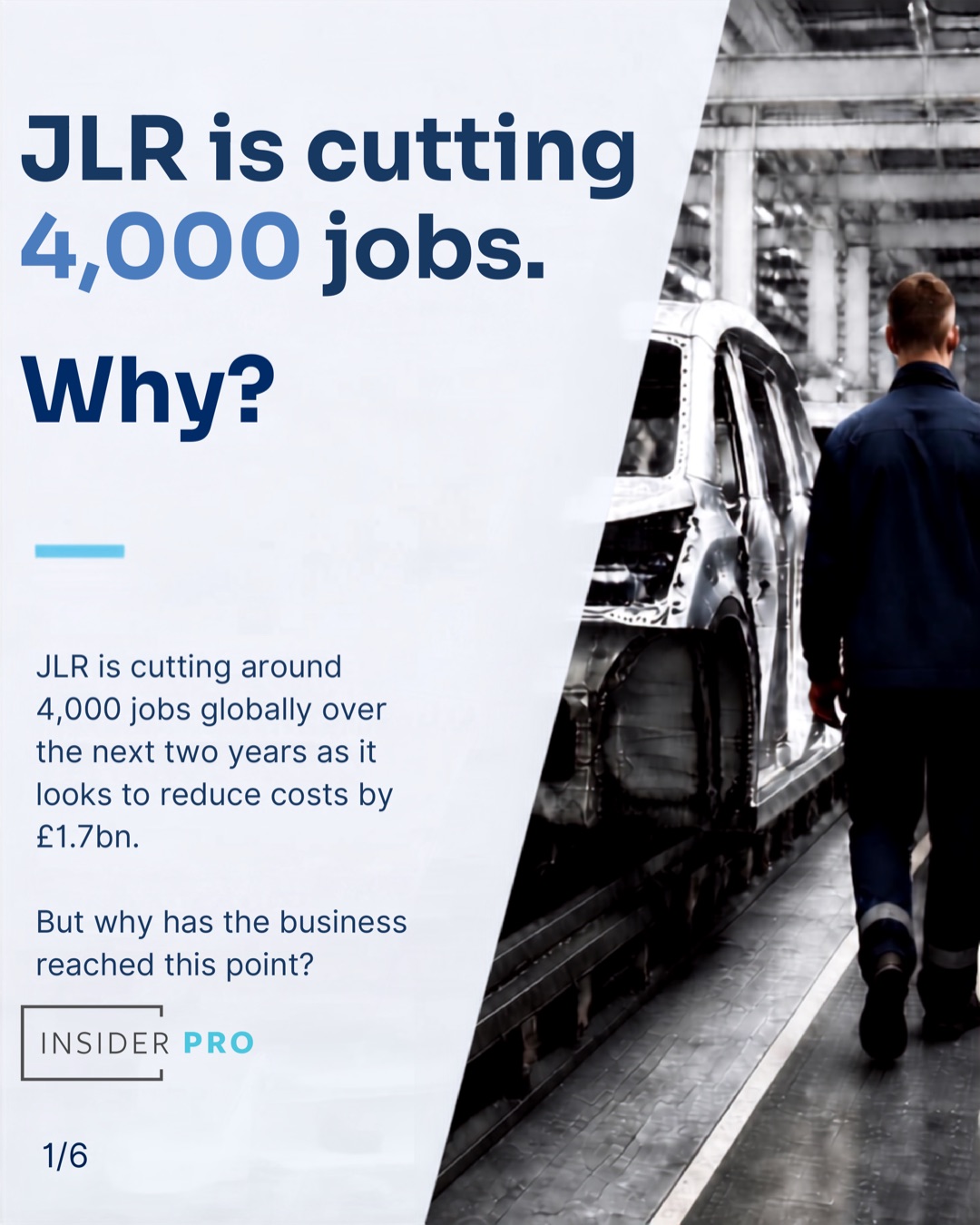
Jaguar Land Rover (JLR) is cutting around 4,000 jobs and £1.7bn of costs after its profit before tax collapsed by more than 99%. This carousel breaks down what has gone wrong, from US tariffs and falling sales in China to a cyberattack and supply-chain disruption, and what happens next.
Swipe, scroll or use the arrows to move through the six slides.
Why JLR is cutting 4,000 jobs
Jaguar Land Rover is cutting around 4,000 jobs globally over the next two years as it looks to reduce costs by £1.7bn. The obvious question is why one of the UK's best-known manufacturers has reached this point.
Profits have collapsed
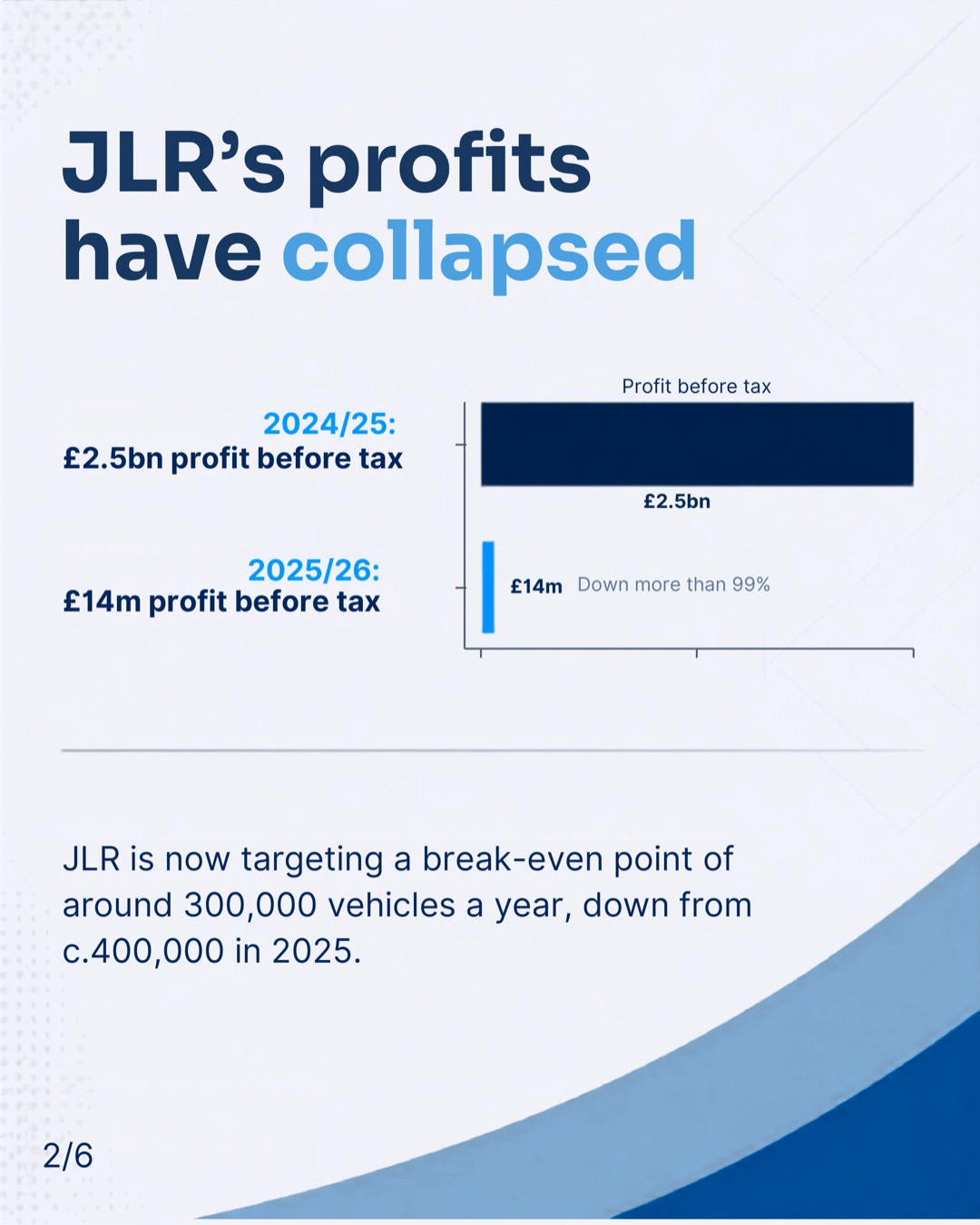
The headline is stark. JLR's profit before tax fell from £2.5bn in 2024/25 to just £14m in 2025/26, a drop of more than 99%. The business is now targeting a break-even point of around 300,000 vehicles a year, down from roughly 400,000 in 2025.
So what's gone wrong?
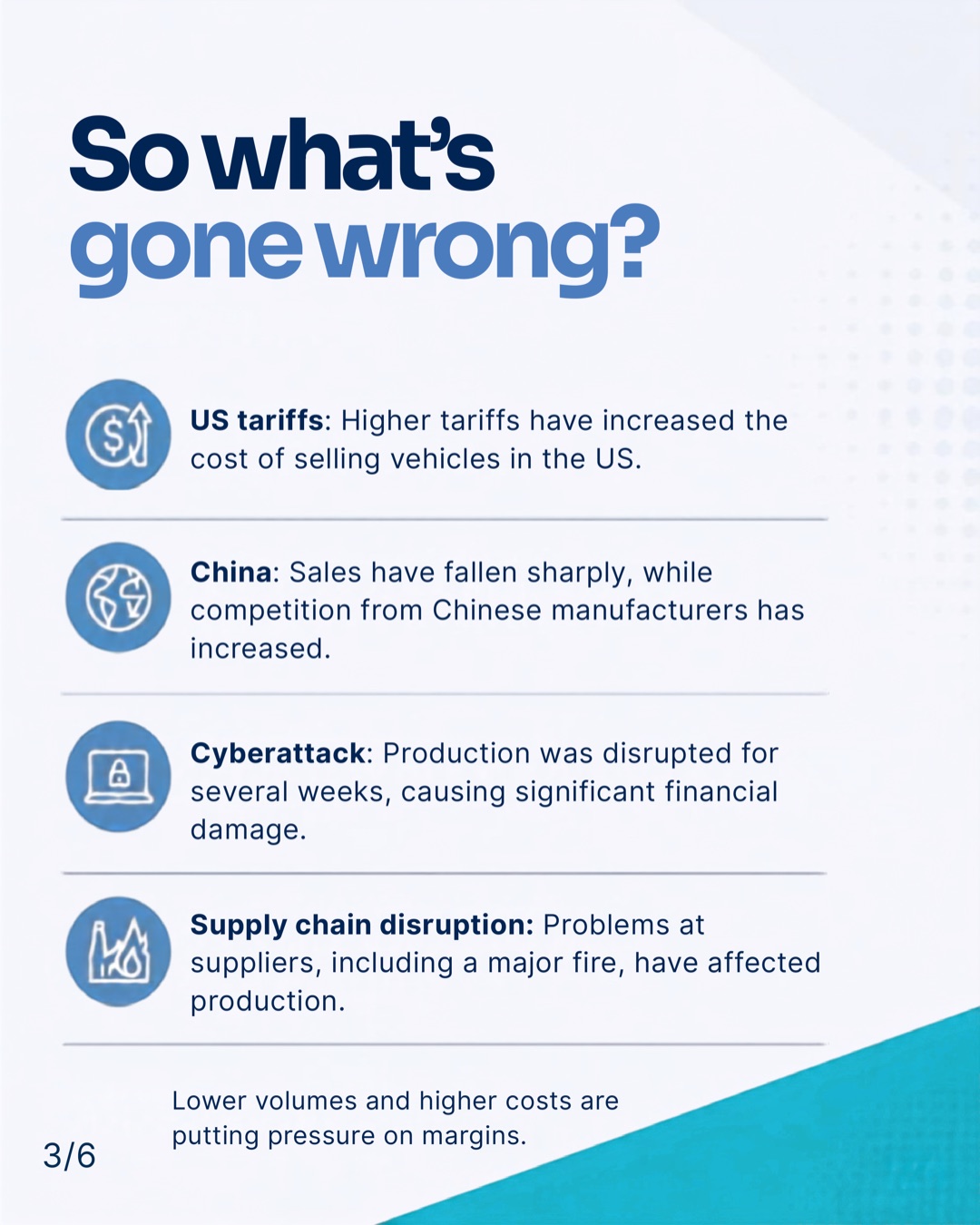
Several pressures have hit at once. US tariffs have increased the cost of selling vehicles into the United States. Sales in China have fallen sharply while competition from Chinese manufacturers has intensified. A cyberattack disrupted production for several weeks, causing significant financial damage. And supply-chain disruption, including a major fire at a supplier, has affected production. Lower volumes and higher costs are squeezing margins from both sides.
China is a major problem
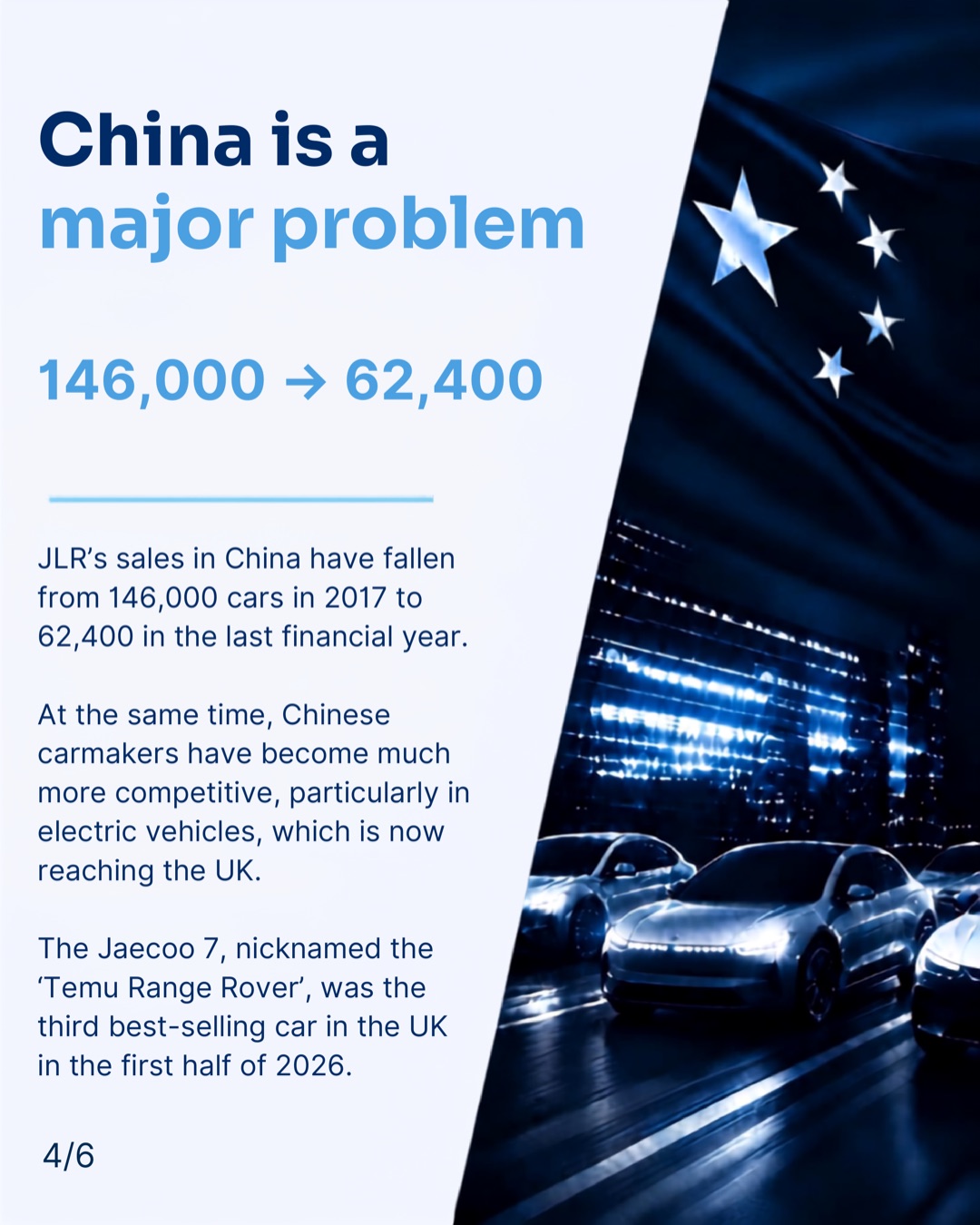
China stands out. JLR's sales there have fallen from 146,000 cars in 2017 to 62,400 in the last financial year. At the same time, Chinese carmakers have become far more competitive, particularly in electric vehicles, and that competition is now reaching the UK. The Jaecoo 7, nicknamed the "Temu Range Rover", was the third best-selling car in the UK in the first half of 2026.
What it means for the UK
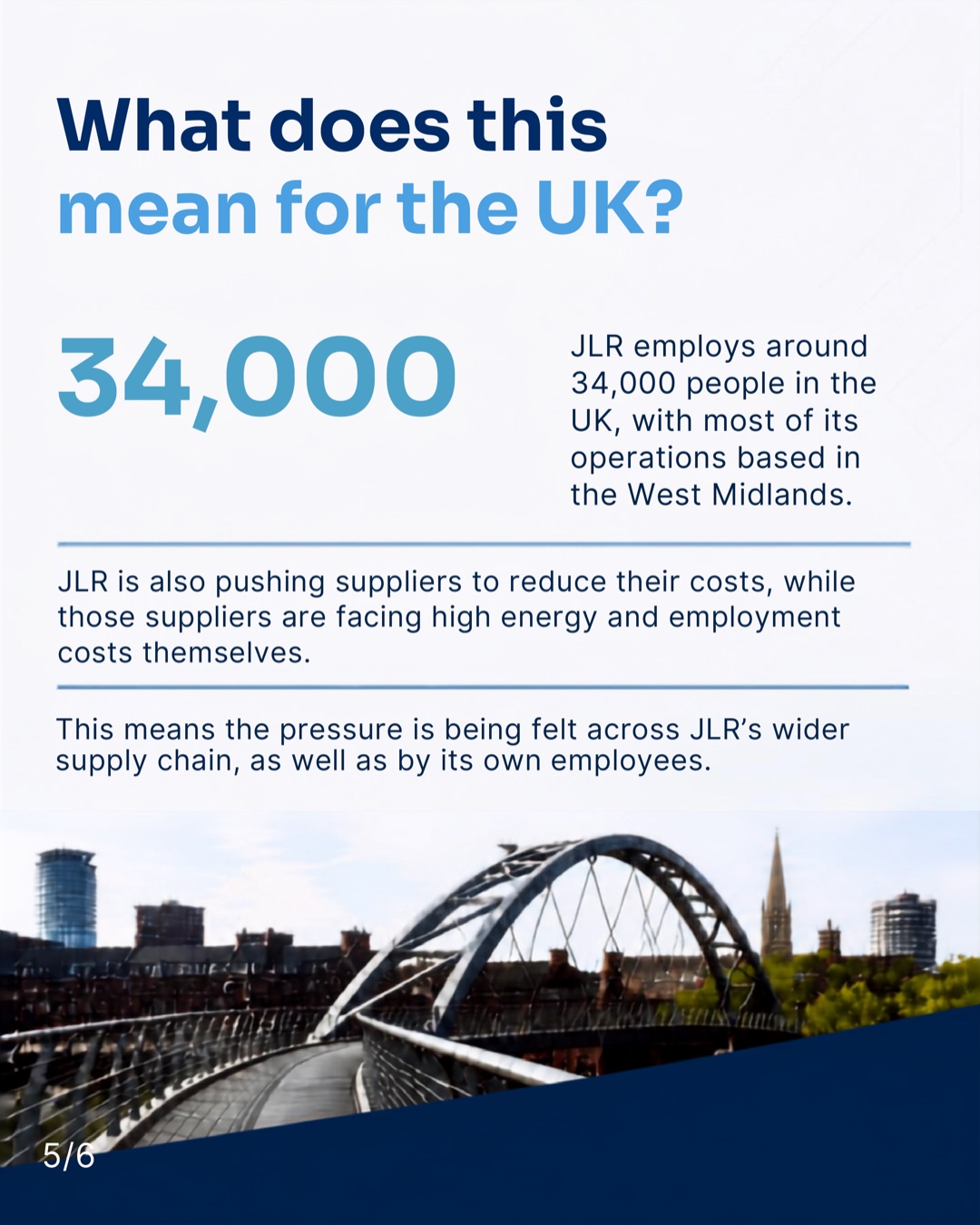
JLR employs around 34,000 people in the UK, most of them based in the West Midlands. It is also pushing its suppliers to reduce costs, while those suppliers are themselves facing high energy and employment costs. The pressure is therefore being felt right across JLR's wider supply chain, not just among its own employees, which is exactly where cost and operational resilience are won or lost.
What happens next?
Alongside the cuts, JLR plans to invest £15bn to £18bn over five years in areas including electric vehicles, digital technology and manufacturing, and to launch five new models over the next 12 months. The aim is to reduce costs now while investing in future growth. The open question is whether JLR can turn things around.